
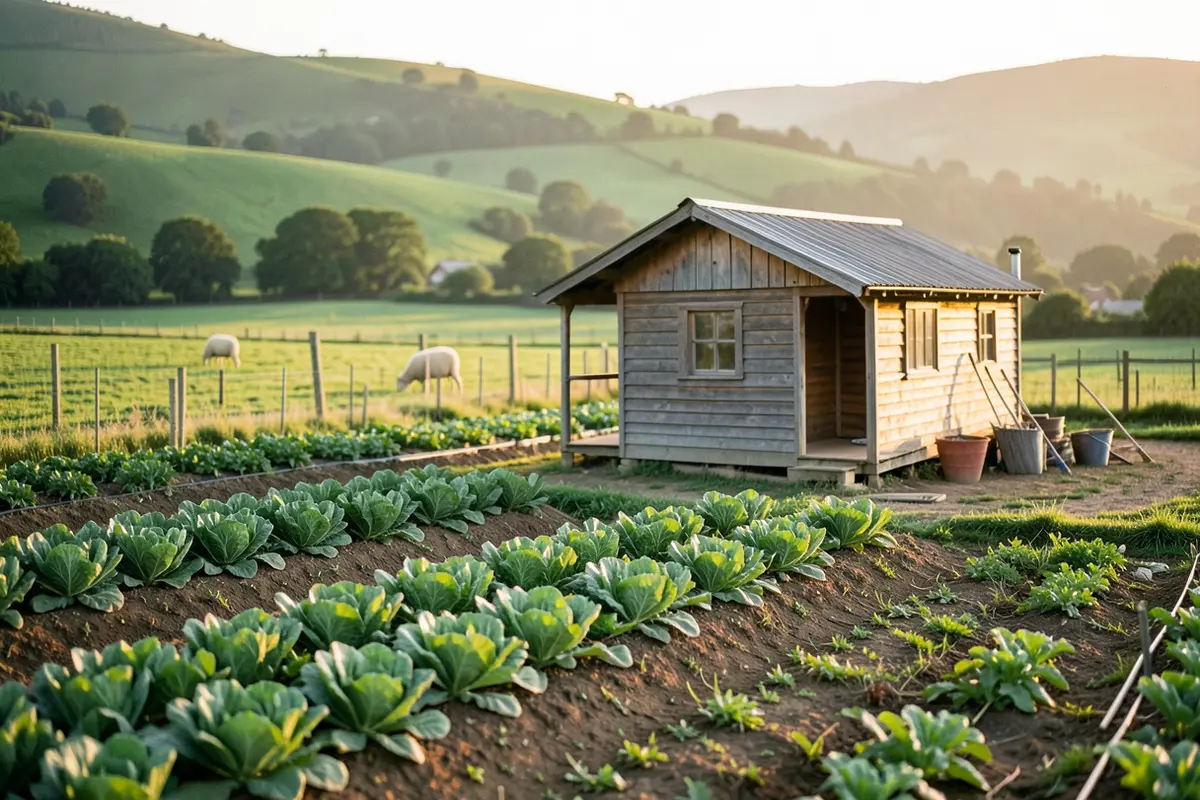
Farmstays are a form of agritourism where guests stay overnight on a working farm, ranch, or vineyard. These retreats allow visitors to experience rural life firsthand, often involving opportunities to observe agricultural practices, interact with farm animals, and consume fresh, site-produced food in a natural, pastoral environment.
By shifting the focus from passive sightseeing to active participation, these stays provide a grounded alternative to traditional hotels. In 2026, more travelers are looking for ways to reduce their environmental impact while deepening their connection to the food systems and ecosystems that sustain them.
What Farmstays means
At its most basic level, a farmstay is an invitation into the daily rhythm of agriculture. Unlike a rural hotel that happens to be near a field, a true farmstay is integrated into the production of the land. This might mean waking up to the sound of a tractor in the distance or seeing the very sheep that provide the wool for the blankets in your cabin. In places like France, these are often categorized as fermes-auberges, while in Italy, they are known as agriturismi. The defining characteristic is the presence of active farming, whether it is viticulture, dairy production, or organic vegetable gardening.
For example, a guest at a working dairy farm in Vermont might see the morning milking process before sitting down to a breakfast of fresh yogurt and milk. The experience is educational and immersive, stripping away the layers of industrial food processing to show the labor and care required to manage the land. It is a practical education in seasonality, as the activities available to guests change drastically between the spring planting and the autumn harvest.
Why it matters
Farmstays play a vital role in preserving small-scale agriculture and rural heritage. As industrial farming continues to consolidate, many family-run farms use agritourism as a secondary revenue stream that allows them to keep their land in production. For the traveler, travelers are finally choosing eco friendly options like these because they offer a significantly lower carbon footprint than large-scale resorts. You are often eating food grown within walking distance of your bed, which eliminates the emissions associated with long-distance food transport.
Beyond environmental benefits, these stays foster a sense of psychological well-being. The "nature deficit" common in urban environments is addressed through direct contact with soil, animals, and open spaces. In 2026, the value of silence and the absence of artificial light pollution are becoming premium commodities in the travel market. Supporting a farmstay means supporting a local economy directly, ensuring that the funds stay within the community rather than being diverted to multinational hotel chains.
How it works
Booking a farmstay can range from using specialized platforms to contacting farmers directly. Some stays are purely for relaxation, where you are a guest who enjoys the scenery, while others are more interactive. Platforms like Farm Stay USA or Agriturismo.it act as directories to help you find the right fit based on the type of farm (e.g., horse ranch vs. olive grove). Once you arrive, the experience is typically less formal than a hotel. You might be given a tour of the grounds and told which areas are off-limits for safety reasons.
Expectations regarding amenities vary. Some farmstays offer luxury "glamping" tents with high-end linens, while others provide simple rooms in a converted barn. It is important to remember that the farm’s primary function is production, not hospitality; this means the host may be busy with chores during the day. However, this lack of constant "service" is exactly what many guests seek—a chance to exist in a space that doesn't revolve entirely around consumerism.
Common misconceptions
One of the most persistent myths is that a farmstay requires manual labor. While some programs like WWOOF (World Wide Opportunities on Organic Farms) involve working in exchange for food and board, most commercial farmstays are strictly for-profit hospitality where work is entirely optional. You can spend your whole trip reading under a tree if you wish. Another misconception is that these stays are always "rustic" or uncomfortable. In reality, many modern farmstays offer high-end amenities, including private hot tubs, gourmet kitchens, and professional spa services that use farm-grown herbs.
There is also the idea that farmstays are only for families with young children. While kids certainly enjoy meeting animals, many locations cater specifically to adults seeking solitude, creative retreats, or culinary workshops. A vineyard stay in Bordeaux, for instance, focuses more on soil pH and fermentation cycles than on petting zoos. Finally, do not assume farmstays are only in remote wilderness; many are located just an hour outside major metropolitan hubs, providing a quick escape for city dwellers.
Key terms
- Agritourism: Any agriculturally based operation or activity that brings visitors to a farm or ranch.
- Regenerative Agriculture: Farming practices that focus on soil health and restoring biodiversity; many sustainable farmstays use this as a selling point.
- Farm-to-Table: A social movement where food is sourced directly from the producer; in a farmstay, this usually means the table is on the farm itself.
- Silvopasture: The practice of integrating trees, forage, and the grazing of domesticated animals in a mutually beneficial way.
- Heritage Breeds: Traditional livestock breeds that were raised by our ancestors before industrial farming; many farmstays help preserve these rare animals.
Practical tips
When planning your 2026 retreat, consider these 8 specific platforms and locations that represent the best in sustainable farmstay experiences:
1. Feather Down Farms (UK & Europe)
This network of farms offers "unplugged" stays in spacious canvas lodges. There is no electricity, forcing a total reset. You cook on a wood-burning stove and use oil lamps for light. It is a perfect example of how luxury can be found in simplicity and the absence of digital distractions.
2. Stony Creek Farmstead (New York, USA)
Located in the Catskills, this farmstead allows guests to participate in the "meat and greet" where you learn about sustainable livestock management. It is a prime destination for those looking to understand the logistics of a working organic farm while staying in high-quality platform tents.
3. Agriturismo Il Rigo (Tuscany, Italy)
This farm focuses on organic grain production and slow tourism. It is located in the Val d'Orcia, a UNESCO World Heritage site. They offer workshops on making traditional pici pasta using their own flour, emphasizing the short distance between the field and the plate.
4. Babylonstoren (Simondium, South Africa)
A more upscale example, this Cape Dutch farm features a massive formal garden where every plant is edible or has medicinal value. Guests can join the gardeners for a harvest or participate in essential oil distillation, showing the sophisticated side of agritourism.
5. Fattoria La Vialla (Tuscany, Italy)
A pioneer in biodynamic farming, this family-run estate is carbon-neutral. They produce everything from wine to pecorino cheese and olive oil. Their guest houses are restored farm buildings that use solar energy, making it a benchmark for sustainable operations.
6. Kinnard Farms (Wisconsin, USA)
For those interested in the dairy industry, this farm provides a transparent look at modern milk production. They offer tours that explain the technology used to keep cows healthy and comfortable, bridging the gap between traditional farming and modern innovation.
7. Ebbio (Tuscany, Italy)
Ebbio is an 800-year-old farmhouse that functions as an organic farm and a yoga retreat. It demonstrates how farmstays can pivot toward wellness, using the natural tranquility of the countryside to enhance physical and mental health practices.
8. The Apple Farm (Tipperary, Ireland)
This location combines a commercial orchard with a high-quality camping park. Guests can see how cider and apple juice are produced while staying in a location that prioritizes biodiversity and the preservation of native Irish apple varieties.
Before you go, always pack sturdy, waterproof footwear. Even the most manicured farm will have mud and uneven terrain. If you are traveling with pets, check the farm's policy beforehand, as many working farms have strict rules to protect their own livestock. Also, remember to book well in advance for peak harvest seasons (like September for vineyards), as these are the most popular times for visitors. You can experience french camping with views, comfort and still find yourself within walking distance of a local farm gate for your morning supplies.
How this relates to Unique & Sustainable Stays
Choosing a farmstay is a conscious decision to step away from generic travel experiences. It aligns with the philosophy of slow living, where the quality of the environment and the authenticity of the interaction take precedence over the number of amenities. These stays prove that sustainability does not have to mean sacrifice; instead, it offers a richer, more sensory experience than a standard hotel room ever could.
By prioritizing places that manage the land with care, you contribute to a future where travel and ecology work in tandem. Whether you are sleeping in a converted grain silo or a luxury tent in an orchard, the goal remains the same: to leave the land better than you found it. This commitment to the outdoors and the preservation of natural beauty is at the heart of the philosophy at Camping Romarins, where every guest is encouraged to find their own rhythm in the Great Outdoors.